
✨This post may contain affiliate links. As an Amazon Associate, I earn from qualifying purchases.
Out of cinnamon halfway through a recipe? Don’t panic! These Cinnamon Substitutes will help you keep baking (or cooking!) with easy pantry swaps, simple measurements, and plenty of that warm, cozy flavour we all love.
We’ve ALL been there. You’re halfway through making something delicious, reach for the cinnamon, and realize the jar is empty. Of course it is. 😂 But before you abandon those cookies or put your apple crisp plans on hold, take a peek inside your spice cabinet. You might already have exactly what you need!
From nutmeg and allspice to cardamom and ginger, there are plenty of spices similar to cinnamon that can bring warmth and flavour to your favourite recipes. Some work beautifully in baked goods, others are better suited for savoury dishes, and a few spice blends can come surprisingly close to the real thing.


Quick Answer
Need a cinnamon substitute RIGHT NOW? Try ½ teaspoon of ground nutmeg or ¼–½ teaspoon of allspice for every 1 teaspoon of ground cinnamon. For sweet recipes, pumpkin pie spice or apple pie spice can also work as a 1:1 swap, provided you’re not avoiding cinnamon altogether.
Below, I’m breaking down 10 easy cinnamon alternatives, exactly how much to use, and which recipes they’re best suited for. Because running out of one spice shouldn’t mean giving up on something delicious!
Cinnamon Substitute Chart: 10 Easy Swaps
Need a quick replacement for cinnamon? This handy chart shows you exactly how much of each spice to use in place of 1 teaspoon of ground cinnamon, plus where each one works best.
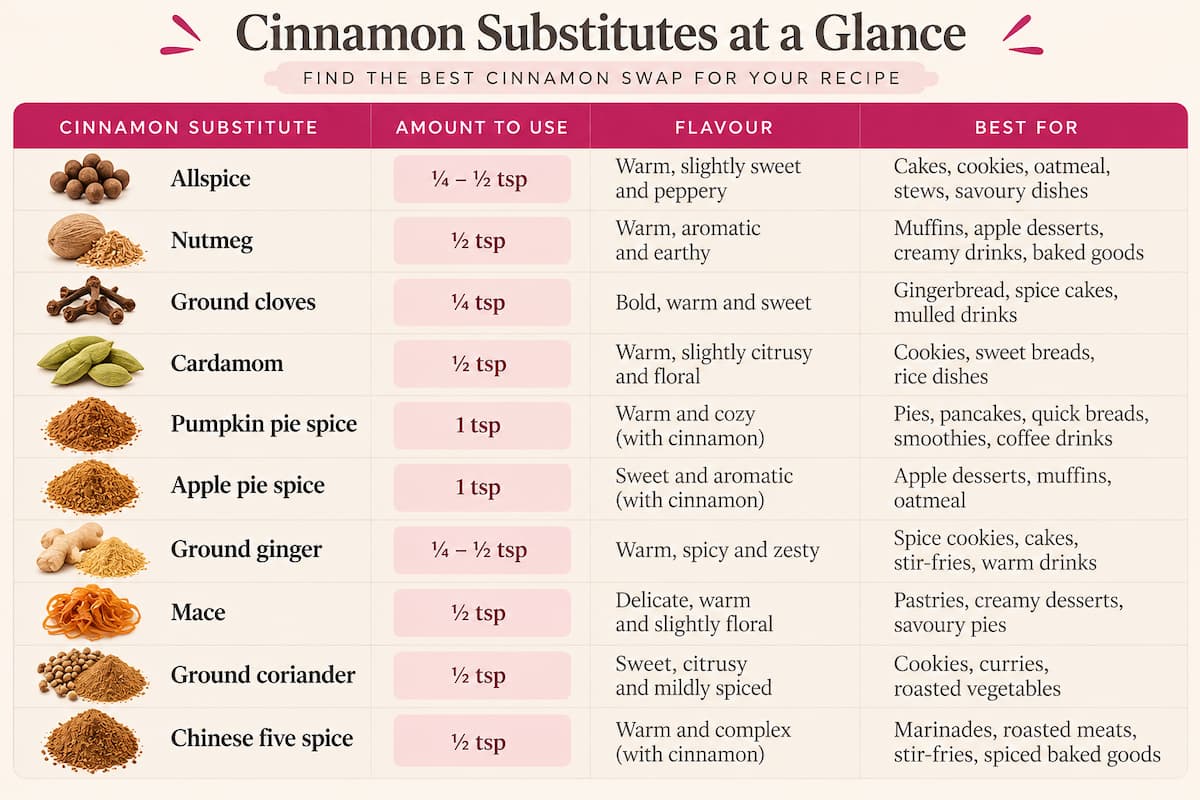
A QUICK HEADS-UP: These are starting points, not exact flavour matches! Begin with the smaller amount when a range is given, taste when possible, and adjust to suit your recipe. Pumpkin pie spice, apple pie spice, and Chinese five spice typically contain cinnamon, so they aren’t suitable if you need a cinnamon-free alternative.
Best Cinnamon Substitutes for Baking, Cooking, and More
Not every cinnamon alternative tastes exactly like cinnamon, but plenty can bring that same warm, aromatic flavour to your favourite recipes. The trick is choosing the right spice for what you’re making!
Allspice
Allspice is one of my favourite cinnamon substitutes because it brings a similar warmth and sweetness, with a slightly peppery kick. Despite its name, it’s actually a single spice made from dried berries, not a blend!
How much to use:
Start with ¼ to ½ teaspoon of ground allspice for every 1 teaspoon of cinnamon. It’s a little more intense, so I’d start small and work my way up.
Best for:
Cookies, cakes, oatmeal, spice blends, and savoury dishes like stews or chili.
Andrea’s Tip:
Allspice works especially well in recipes with several warming spices. If your recipe already calls for nutmeg or cloves, you might not need as much allspice to get that cozy flavour you’re after.
Nutmeg
Nutmeg is another fantastic substitute for cinnamon, especially when you’re baking something sweet! It has that same warm, cozy aroma, but with a slightly nuttier, earthier flavour. It’s stronger than cinnamon, though, so a little goes a long way.
How much to use:
Start with ½ teaspoon of ground nutmeg for every 1 teaspoon of cinnamon. You can also combine it with a pinch of ginger or allspice for a more rounded flavour.
Best for:
Pumpkin pies, muffins, apple desserts, French toast, and creamy drinks like my healthy homemade eggnog.
Andrea’s Tip:
Freshly grated nutmeg has a particularly bold aroma, so use a light hand if you’re grating it yourself. You can always add more, but you can’t take it back once it’s mixed in!
Cloves
Cloves bring a bold, sweetly spiced warmth that can stand in for cinnamon when you want a little extra depth. They’re much stronger and more pungent, though, so this is definitely one of those spices where LESS is more!
How much to use:
Start with ¼ teaspoon of ground cloves for every 1 teaspoon of cinnamon. You can also combine a small pinch with nutmeg or allspice to soften that intense clove flavour.
Best for:
Gingerbread, spice cakes, holiday cookies, mulled drinks, and other recipes where a bold, warming spice fits right in.
Andrea’s Tip:
Cloves can take over a recipe pretty quickly, especially when they’re the only spice you’re using. If you’re replacing a larger amount of cinnamon, don’t automatically multiply the cloves without considering the overall flavour. Start small!
Cardamom
Cardamom brings a warm, slightly sweet flavour with hints of citrus and a little floral kick. It’s not an exact match for cinnamon, but it’s a delicious alternative when you want something fragrant without overpowering everything else. I especially love it in baked goods and cozy drinks!
How much to use:
Start with ½ teaspoon of ground cardamom for every 1 teaspoon of cinnamon. Its flavour is pretty distinctive, so you can always add more if needed.
Best for:
Cookies, sweet breads, muffins, rice pudding, coffee drinks, and savoury rice dishes.
Andrea’s Tip:
Make sure you’re using ground green cardamom, not black cardamom! Black cardamom has a much smokier flavour and isn’t a good swap for cinnamon in sweet recipes.
Pumpkin Pie Spice
Pumpkin pie spice is one of the easiest cinnamon substitutes for sweet recipes because it usually contains cinnamon along with nutmeg, ginger, cloves, and allspice. You get that familiar warm, cozy flavour with a little extra spice thrown into the mix. And if your spice cabinet is missing this one too, you can always whip up my homemade pumpkin spice mix!
How much to use:
Substitute 1 teaspoon of pumpkin pie spice for every 1 teaspoon of cinnamon. It’s an easy 1:1 swap, although the other spices will slightly change the flavour.
Best for:
Pumpkin pie, muffins, pancakes, quick breads, oatmeal, and cozy coffee drinks.
Andrea’s Tip:
Pumpkin pie spice is perfect when you’ve simply run out of ground cinnamon, but it’s NOT a cinnamon-free alternative. If you’re avoiding cinnamon because of an allergy, skip this one and choose an individual spice instead. And if you’re missing other ingredients for your favourite fall recipes, my pumpkin spice substitutes guide has more handy swaps!
Apple Pie Spice
Apple pie spice is another great cinnamon substitute when you’re baking something sweet! Most blends contain cinnamon, nutmeg, and allspice, sometimes with a little cardamom or ginger thrown in. It has that familiar warm, comforting flavour, making it a natural choice for all your favourite apple treats.
How much to use:
Substitute 1 teaspoon of apple pie spice for every 1 teaspoon of cinnamon. The flavour might be slightly more complex, but it works beautifully in most sweet recipes.
Best for:
Apple pies, muffins, oatmeal, baked apples, and cozy desserts like my apple crisp without oats.
Andrea’s Tip:
Just like pumpkin pie spice, apple pie spice usually contains cinnamon, so it’s great when your cinnamon jar is empty but NOT suitable if you need to avoid cinnamon altogether. Always check the ingredients on your particular blend!
Ground Ginger
Ground ginger brings a warm, slightly peppery kick with a little zing that makes it a great cinnamon alternative! It’s sharper and less sweet than cinnamon, but it works beautifully in recipes where you want that cozy spice without losing any flavour.
How much to use:
Start with ¼ to ½ teaspoon of ground ginger for every 1 teaspoon of cinnamon. You can also combine it with a little nutmeg or allspice for a more rounded, cinnamon-like flavour.
Best for:
Gingerbread, spice cookies like my gingerbread kiss cookies, cakes, muffins, warm drinks, and savoury dishes like curries and stir-fries.
Andrea’s Tip:
Use ground ginger rather than fresh ginger when replacing cinnamon in baked goods. Fresh ginger adds moisture and a much sharper flavour, which can change how your recipe turns out!
Mace
Mace comes from the same plant as nutmeg, so it’s no surprise that the two have a similar warm, aromatic flavour! Mace is a little more delicate, with subtle floral and peppery notes that make it a surprisingly good cinnamon substitute, especially in baked goods.
How much to use:
Start with ½ teaspoon of ground mace for every 1 teaspoon of cinnamon. It’s fragrant without being quite as bold as cloves, but you can always adjust to taste.
Best for:
Cakes, cookies, pastries, creamy desserts, savoury pies, and sausage dishes.
Andrea’s Tip:
Don’t confuse ground mace with whole mace blades! Both come from the same spice, but the ground version is much easier to measure and swap directly into recipes that call for ground cinnamon.
Ground Coriander
Ground coriander might not be the first spice you think of when replacing cinnamon, but hear me out! It has a mild, slightly sweet flavour with warm, citrusy notes that work nicely in both sweet and savoury recipes. It’s not quite as bold as cinnamon, though, so it works best when combined with another warming spice.
How much to use:
Start with ½ teaspoon of ground coriander for every 1 teaspoon of cinnamon. Add a small pinch of nutmeg or allspice if you want a little more warmth.
Best for:
Cookies, spice cakes, curries, roasted vegetables, and savoury spice blends.
Andrea’s Tip:
Make sure you’re using ground coriander seeds, NOT fresh cilantro! They come from the same plant but taste completely different, and fresh cilantro definitely won’t give you that cozy cinnamon-like flavour.
Chinese Five Spice
Chinese five spice brings a bold, aromatic flavour that’s a little sweet, a little peppery, and packed with warmth! Most blends contain cinnamon (or cassia), star anise, cloves, fennel, and Sichuan peppercorns. It’s definitely more complex than cinnamon on its own, but it makes a delicious substitute when you’re cooking something savoury.
How much to use:
Start with ½ teaspoon of Chinese five spice for every 1 teaspoon of cinnamon. It’s pretty powerful, so I’d use a light hand and adjust to taste.
Best for:
Stir-fries, roasted meats, marinades, braised dishes, and savoury spice rubs.
Andrea’s Tip:
Chinese five spice has a distinctive liquorice-like flavour from the star anise and fennel, so it can completely change the taste of a sweet recipe. I’d save this one for savoury dishes rather than using it in something like cinnamon rolls! Also, most blends contain cinnamon, so it’s not suitable for anyone avoiding it because of an allergy.
What Can I Use Instead of a Cinnamon Stick?
Recipe calls for a cinnamon stick, but you’ve only got ground spices? No problem! Cinnamon sticks are usually added to liquids and simmered to slowly release their warm, aromatic flavour. You can still get a similar result with a few pantry-friendly swaps.
- Ground cinnamon: If you’ve got the ground stuff, use approximately ½ teaspoon for every 1 cinnamon stick. Keep in mind that ground cinnamon won’t dissolve completely, so it may leave little specks in your finished dish.
- Whole cloves: Try 2–3 whole cloves for a warm, aromatic flavour. They’re stronger than cinnamon, so use them sparingly and remove them before serving.
- Whole star anise: Use ½ to 1 star anise pod for a sweet, liquorice-like flavour. It’s not an exact match, but it works beautifully in certain simmered drinks and savoury dishes.
- Cardamom pods: Try 2–3 lightly crushed green cardamom pods for a fragrant, slightly citrusy alternative.
Andrea’s Tip: If you’re making something like mulled cider, chai, or a simmering sauce, whole spices are especially handy because you can fish them out before serving. Ground spices work too, but they’ll stay in the liquid and can affect its texture.
And remember, if you’re avoiding cinnamon because of an allergy, ground cinnamon obviously isn’t an option. Stick with a cinnamon-free spice instead!
Best Cinnamon Substitutes for Baking
When it comes to baking, not all cinnamon substitutes are created equal! Some bring that familiar sweet warmth, while others can completely change the flavour of your cookies, cakes, or muffins. Here’s how I’d choose depending on what you’re making:
- For cookies and cakes: Nutmeg, allspice, and cardamom are great choices. They add warmth without taking the flavour in a completely different direction.
- For apple desserts: Apple pie spice is an easy 1:1 swap, while a little nutmeg or allspice works beautifully if you’re out of both cinnamon AND apple pie spice.
- For pumpkin treats: Pumpkin pie spice is the obvious choice, but nutmeg and ginger also complement pumpkin beautifully.
- For cinnamon rolls and sweet breads: Cardamom is especially delicious here! It won’t taste exactly like cinnamon, but its fragrant, slightly citrusy flavour works wonderfully in sweet dough.
- For oatmeal and breakfast baking: Try nutmeg, allspice, or a little ground ginger, depending on how bold you want the flavour.
Andrea Says
If cinnamon is the main flavour of your recipe, like in cinnamon rolls or cinnamon sugar cookies, expect the finished result to taste different. These swaps bring warmth and spice, but they won’t recreate cinnamon’s exact flavour. And that’s okay! Sometimes a little experimenting leads to something seriously delicious.
Frequently Asked Questions
Running out of cinnamon doesn’t have to put your baking plans on hold! Whether you’re reaching for nutmeg, allspice, cardamom, or another one of these cinnamon alternatives, there’s plenty of room to experiment with those warm, cozy flavours we all love.
Have a favourite cinnamon swap I didn’t mention? Let me know in the comments! I’m always up for discovering another little kitchen trick. 💗
