
✨This post may contain affiliate links. As an Amazon Associate, I earn from qualifying purchases.
This easy turkey brine recipe is my secret to a juicy, flavourful Thanksgiving turkey that’s anything but dry! Made with a simple saltwater brine, brown sugar, and plenty of aromatics, it’s an easy way to give your holiday bird a little extra love.
Growing up, Thanksgiving was a BIG deal in my family. My uncle’s house would be packed with aunts, uncles, cousins, and enough homemade food to cover every inch of the table. These days, living across the country, the Thanksgiving turkey is usually up to yours truly. And while I can’t recreate those big family gatherings, I can definitely make sure the turkey is worth gathering around!
This homemade turkey brine helps the meat stay tender and juicy while adding flavour from garlic, onion, and spices. Just prepare the brine, let your turkey soak in the fridge, then pat it dry and season it before roasting. Pair it with some creamy garlic mashed potatoes and a generous helping of homemade gravy, and you’ve got yourself a Thanksgiving dinner worth looking forward to. Dry turkey? Not on my watch!

Turkey Brine Ingredients

You don’t need anything fancy to make a good turkey brine, just a few pantry staples, some aromatics, and a little patience while your turkey soaks up all that flavour! This recipe has two parts: a wet brine that helps keep the meat juicy and a smoky, slightly spicy seasoning blend that goes on before roasting.
For the Turkey Brine
- Water: The base of the wet brine. You’ll need enough to completely submerge your turkey, so make sure your container is large enough before getting started.
- Kosher Salt: The most important ingredient! Salt helps the turkey retain moisture and seasons the meat beyond the surface. Use 150 g kosher salt, measured by weight for accuracy. Different brands and types of salt vary in density, so avoid measuring by volume or substituting cup for cup.
- Brown Sugar: Balances the saltiness with a little sweetness and rounds out the flavour. Light or dark brown sugar both work.
- Bay Leaf: Adds a subtle, earthy aroma to the brine.
- Poultry Seasoning: Brings those familiar Thanksgiving flavours to the mix. You can also use my homemade chicken seasoning if you have some on hand.
- Whole Black Peppercorns: Add a gentle peppery flavour without making the brine spicy.
- White Onion: Adds a little natural sweetness and savoury depth. No need to chop it finely!
- Garlic: Smashed cloves release their flavour into the brine without any extra fuss.
For the Turkey Seasoning
- Sweet and Smoked Paprika: This combination gives the turkey a warm, smoky flavour and beautiful colour.
- Garlic Powder: Adds an extra layer of savoury flavour to the outside of the bird.
- Cajun Seasoning: Adds a little heat, smokiness, and bold flavour to the turkey. My homemade Cajun seasoning works great here, too! Just be mindful of the salt content, since the turkey has already been brined.
- Dry Mustard: Adds a subtle tang that balances the richer spices.
- Cracked Black Peppercorns: Give the seasoning blend a little bite.
- Cayenne Pepper: Just enough for a gentle kick! Reduce it or leave it out if you prefer a milder turkey.
- Lemon Zest: Brightens up the smoky spices with a fresh citrusy finish.
Find the full ingredient list and exact measurements in the recipe card below.

Andrea Says
Want a more traditional herb flavour? You can skip the smoky, slightly spicy seasoning blend and use my savoury herb turkey dry rub instead. Just go easy on any additional salt, since the turkey has already been brined.
How to Brine a Turkey (Key Tips)
Making a wet brine for turkey is pretty straightforward, but a few little details can make a BIG difference. Here’s what to keep in mind for a juicy, flavourful bird without any brining mishaps!
- Measure your salt by weight. Use 150 g kosher salt per gallon (16 cups) of water. Different salts have different crystal sizes, so measuring by weight keeps your brine consistent and helps prevent an overly salty turkey.
- Dissolve the salt and sugar completely. Stir the brine over medium heat until both have dissolved. This helps distribute the seasoning evenly throughout the liquid.
- Cool the brine completely. Never add raw turkey to warm brine! Chill the liquid to refrigerator temperature (40°F/4°C or colder) before adding your bird. An ice bath can help speed things up.
- Choose the right container. Use a large food grade container, stockpot, or sturdy brining bag that can safely hold your turkey and fit in the fridge. Make sure the turkey stays fully submerged, using a clean plate to weigh it down if needed.
- Keep everything cold. Always brine your turkey in the refrigerator at 40°F (4°C) or colder. Never leave it soaking on the counter, even if your kitchen feels cool.
- Don’t overdo the soaking time. Longer isn’t always better! Too much time in the brine can leave the meat overly salty or affect its texture. Follow the brining guidelines below rather than automatically leaving your turkey in for 48 hours.
- Check your turkey’s label first. Avoid brining a turkey that’s already labelled self-basting, enhanced, or pre-brined. These birds often contain added salt and liquid, so another brine could make them too salty.
- Pat it dry, don’t rinse it. Once the turkey is finished brining, remove it from the liquid, discard the used brine, and pat the bird thoroughly dry with paper towels. Rinsing raw poultry can spread bacteria around your kitchen. Drying the skin also helps it brown more beautifully in the oven.

How Long to Brine a Turkey
Wondering how long to brine a turkey? It depends on the size of your bird, but you don’t need to leave it soaking for days to get juicy, flavourful results! For this turkey brine recipe, made with 150 g kosher salt per gallon of water, use the following times as a general guide:
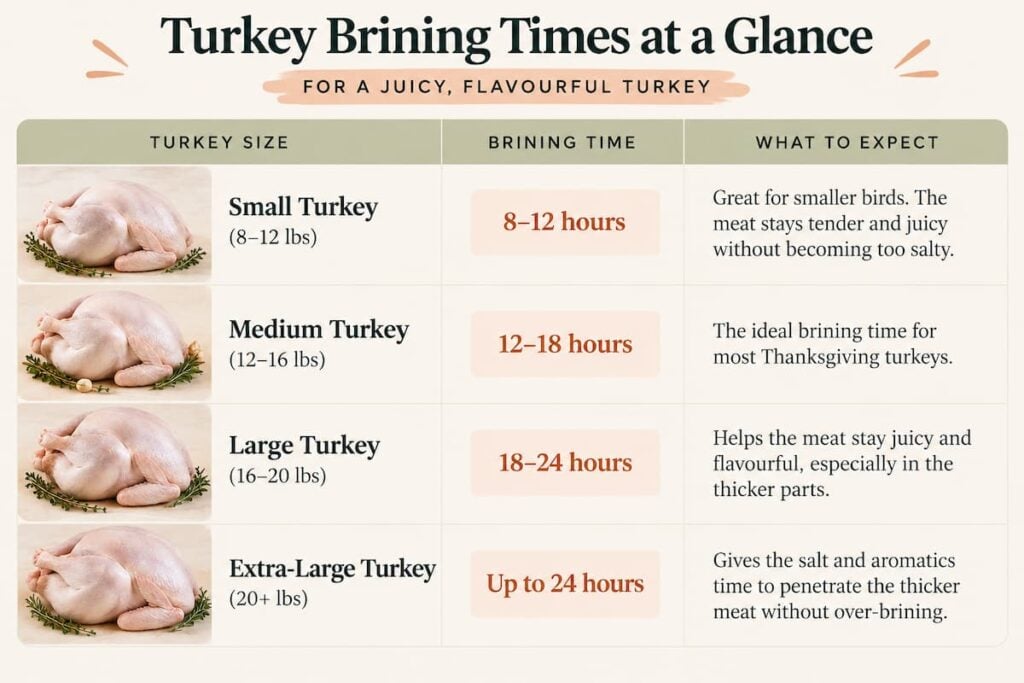
Can you brine a turkey for 48 hours? I wouldn’t recommend it with this recipe. Leaving the turkey in the saltwater solution for too long can make the meat overly salty and affect its texture. For most whole turkeys, 12–24 hours is plenty.
A few things to remember: Always keep your turkey refrigerated at 40°F (4°C) or colder while brining. Once the time is up, remove it from the brine, discard the liquid, and pat the turkey dry with paper towels. If you’re not ready to roast it immediately, keep it refrigerated until cooking time.
Can You Use This Brine for Turkey Drumsticks or Wings?
Absolutely! This turkey brine recipe isn’t just for whole turkeys. You can also use it for turkey drumsticks or wings when you’re cooking for a smaller crowd or simply don’t feel like roasting an entire bird.
Because individual turkey pieces are smaller, they don’t need nearly as much time in the brine. As a starting point, try 4–6 hours for turkey wings or 6–8 hours for turkey drumsticks, keeping everything refrigerated the entire time. These are suggested starting ranges, so avoid leaving the pieces soaking overnight until you’ve tested the results with this salt ratio.
Once they’re brined, pat them dry, season lightly, and use them to make my roasted turkey drumsticks or roasted turkey wings for a juicy, flavourful turkey dinner without having to cook a whole bird!
What to Do After Brining a Turkey
Your turkey has had its nice long soak, so now what? A few simple steps will help you turn that wet-brined turkey into a beautifully browned, juicy Thanksgiving bird!
- Remove the turkey from the brine. Lift it out of the container, let the excess liquid drain away, and discard the used brine. Don’t reuse it for cooking or making gravy.
- Pat the turkey thoroughly dry. Use clean paper towels to dry the skin and cavity. There’s no need to rinse it! Removing excess moisture helps the skin brown and crisp up in the oven.
- Let the skin dry out a little more. If you have time, place the turkey on a rack over a baking sheet and refrigerate it uncovered for a few hours before roasting. This helps dry the skin even further.
- Add your seasoning. Rub the turkey with the smoky, slightly spicy seasoning blend from this recipe, getting some under the skin where possible. Go easy on additional salt, especially if your Cajun seasoning contains salt.
- Roast until safely cooked. Cook your turkey using your preferred roasting method, checking the thickest part of the breast and the innermost thigh and wing with a meat thermometer. The turkey should reach 165°F (74°C) before serving.

Frequently Asked Questions
more recipes for your thanksgiving table
Got your turkey brining? Now it’s time to think about everything else going on that Thanksgiving table! From cozy holiday sides to something sweet for dessert, here are a few recipes to round out the feast.
- Cauliflower Stuffing. All those cozy stuffing flavours, minus the bread.
- Green Bean Casserole. A creamy, comforting Thanksgiving classic.
- Spinach Mashed Potatoes. Creamy mashed potatoes with a twist.
- Glazed Carrots. Sweet, buttery carrots for your plate.
- Bacon Wrapped Brussels Sprouts. Crispy, savoury bites worth making room for.
- Apple Cranberry Crisp. A cozy, fruity finish to dinner.
Made this recipe? ⭐️ If you tried it, leave a star rating in the recipe card! It helps other home cooks know it’s worth making (and makes my day, too!).
Easy Turkey Brine Recipe
Video
Ingredients
For the Turkey Brine
- 1 gallon (16 cups) water
- 150 grams kosher salt (weighed)
- ½ cup brown sugar
- 1 bay leaf
- 1 tbsp poultry seasoning
- ½ tsp whole black peppercorns
- 1 white onion (roughly chopped)
- 3 cloves garlic (smashed)
For the Turkey Seasoning
- 1 tbsp sweet paprika
- 1 tbsp smoked paprika
- 1 tbsp garlic powder
- 1 tbsp Cajun seasoning
- 1 tbsp dry mustard
- 1 tbsp cracked black pepper
- ¼ tsp cayenne pepper (optional)
- zest of 1 lemon
You'll Also Need
- 1 fully thawed, unbrined whole turkey (8–20 lbs)
Instructions
- Add the water, kosher salt, brown sugar, bay leaf, poultry seasoning, peppercorns, onion, and garlic to a large stockpot. Heat over medium heat, stirring until the salt and sugar have completely dissolved. Remove from the heat.

- Let the brine cool, then refrigerate until thoroughly chilled to 40°F (4°C) or colder. Never add raw turkey to warm brine.

- Pat the fully thawed turkey dry with clean paper towel and place it in a large food safe brining container or turkey brining bag.

- Pour the cold brine over the turkey, making sure it's completely submerged. Prepare additional brine at the same ratio if needed to cover the bird. Cover and refrigerate at 40°F (4°C) or colder for the recommended time based on the turkey's weight: 8–12 hours for an 8–12 lb turkey, 12–18 hours for 12–16 lbs, or 18–24 hours for 16–20 lbs. Do not exceed 24 hours.

- Lift the turkey out of the brine and discard the used liquid. Pat the turkey thoroughly dry with paper towels, including inside the cavity. Do not rinse.
- In a small bowl, combine the sweet paprika, smoked paprika, garlic powder, Cajun seasoning, dry mustard, cracked black pepper, cayenne, and lemon zest.

- Rub the seasoning mixture all over the turkey, including under the skin where possible. Avoid adding extra salt, especially if your Cajun seasoning already contains some.
- Roast using your preferred method until a meat thermometer registers 165°F (74°C) in the thickest part of the breast and the innermost part of the thigh and wing. Let the turkey rest before carving.


Notes
Nutrition
Don’t skip the good stuff —
scroll up above the recipe card for ingredient notes, tips & tricks, and easy swaps/variations.Made it? Tell me everything.
I LOVE seeing what you made! Tag @hiphipgourmet on Instagram (or use #hiphipgourmet) so I can see it — then rate it + upload your photo below. 💖
Who knew a simple brown sugar turkey brine could make such a BIG difference on Thanksgiving?! If you give it a try, snap a pic of your juicy bird and tag @HipHipGourmet on social media so I can see how yours turned out!
Save this one for later?
