
Fried Sage Leaves might sound fancy, but they’re shockingly easy to make (and insanely good!). They add that crispy, herby pop that makes any dish feel restaurant-worthy.
If you’ve ever been to an Italian restaurant, chances are you’ve seen at least one pasta dish “topped with crispy sage.” And if you’re anything like me, you start drooling the moment you read those words.
Fried sage leaves are one of those magical little things that instantly make everything taste better. Who knew that quickly frying a handful of fresh herbs could create something so bold, crispy, and wildly flavourful? Something so good, you’ll want to sprinkle them on everything you eat. Or just snack on them straight from the pan.
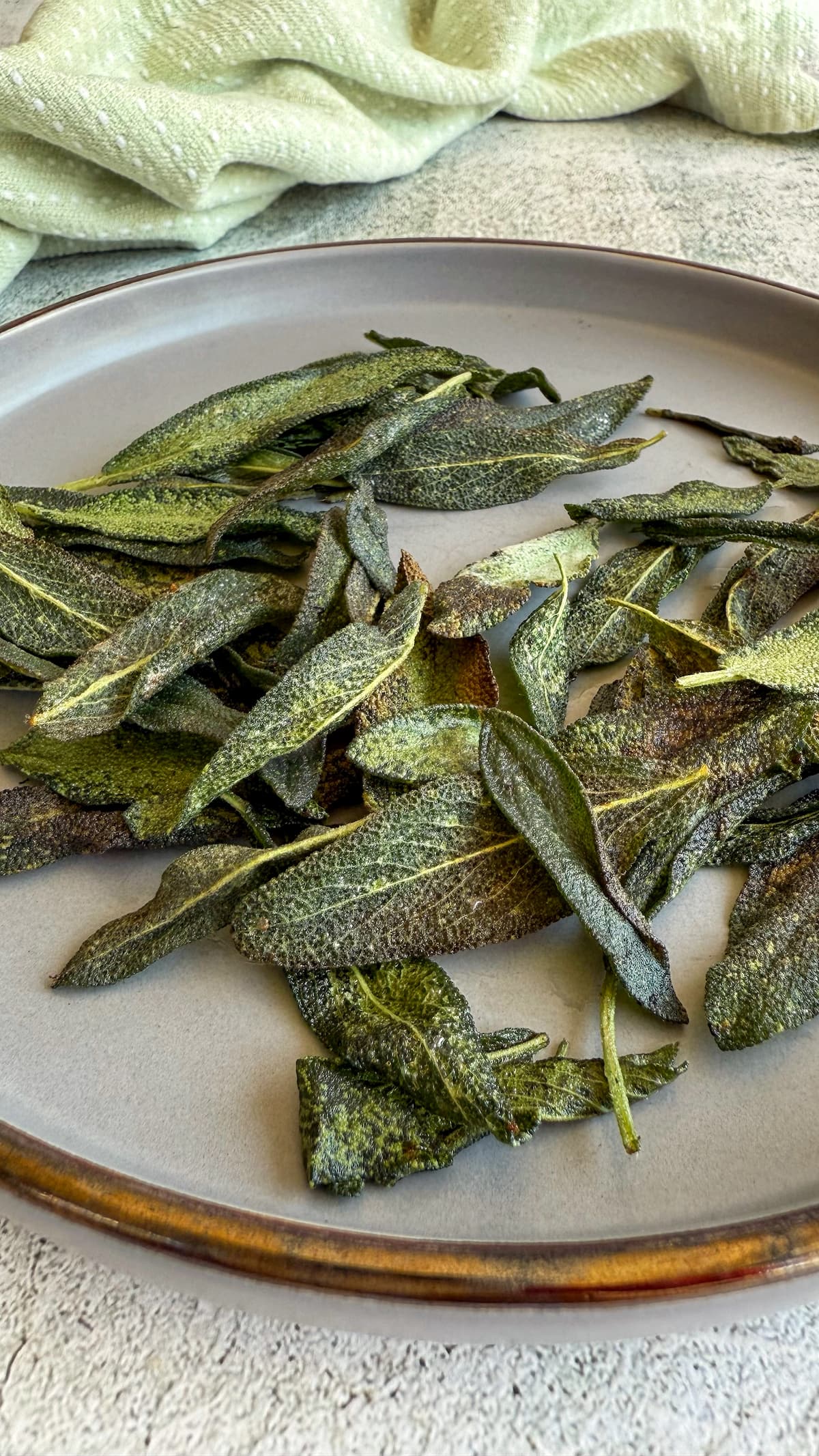

Crispy fried sage leaves are fun to make and add the perfect touch to your cozy weeknight dinners or holiday favourites. They’re great on—or mixed into—everything from eggs to mashed potatoes. And they’re ridiculously easy to make, giving your meals an instant upgrade.
So, next time you feel like your soup or pasta is missing a little something, fry up some fresh sage leaves and take it up a notch. Or seven. Trust me. It’s giving Italian restaurant vibes without ever having to change out of your pajamas.
WHAT YOU’LL NEED TO MAKE CRISPY FRIED SAGE LEAVES

These delicate, crisp leaves come together with just a few simple ingredients, but choosing the right ones makes all the difference. Here’s what to gather before you start:
- Fresh Sage Leaves: Go for whole, unblemished leaves with a silvery-green hue. The fresher the better, as wilted or dried-out sage won’t fry evenly. Medium-sized leaves work best for a perfect crisp.
- Neutral Oil or Butter: A high smoke-point oil like avocado, grapeseed, or light olive oil is ideal for quick frying. For extra flavour, try frying in butter or a half butter/half oil combo for the best of both worlds.
- Fine Sea Salt or Flaky Salt (not pictured, optional): A pinch of salt right after frying enhances the natural savoury flavour of the sage. Flaky salt like Maldon gives an extra touch of texture and visual appeal.

HOW TO FRY SAGE LEAVES (KEY TIPS)

You can find full instructions for how to make these crispy fried sage leaves in the recipe card down below, but here are a few quick tips to keep in mind:
- Use fresh, dry leaves. Make sure your sage leaves are completely dry before frying . Any moisture will cause splattering and soggy results. Pat them with a paper towel if needed.
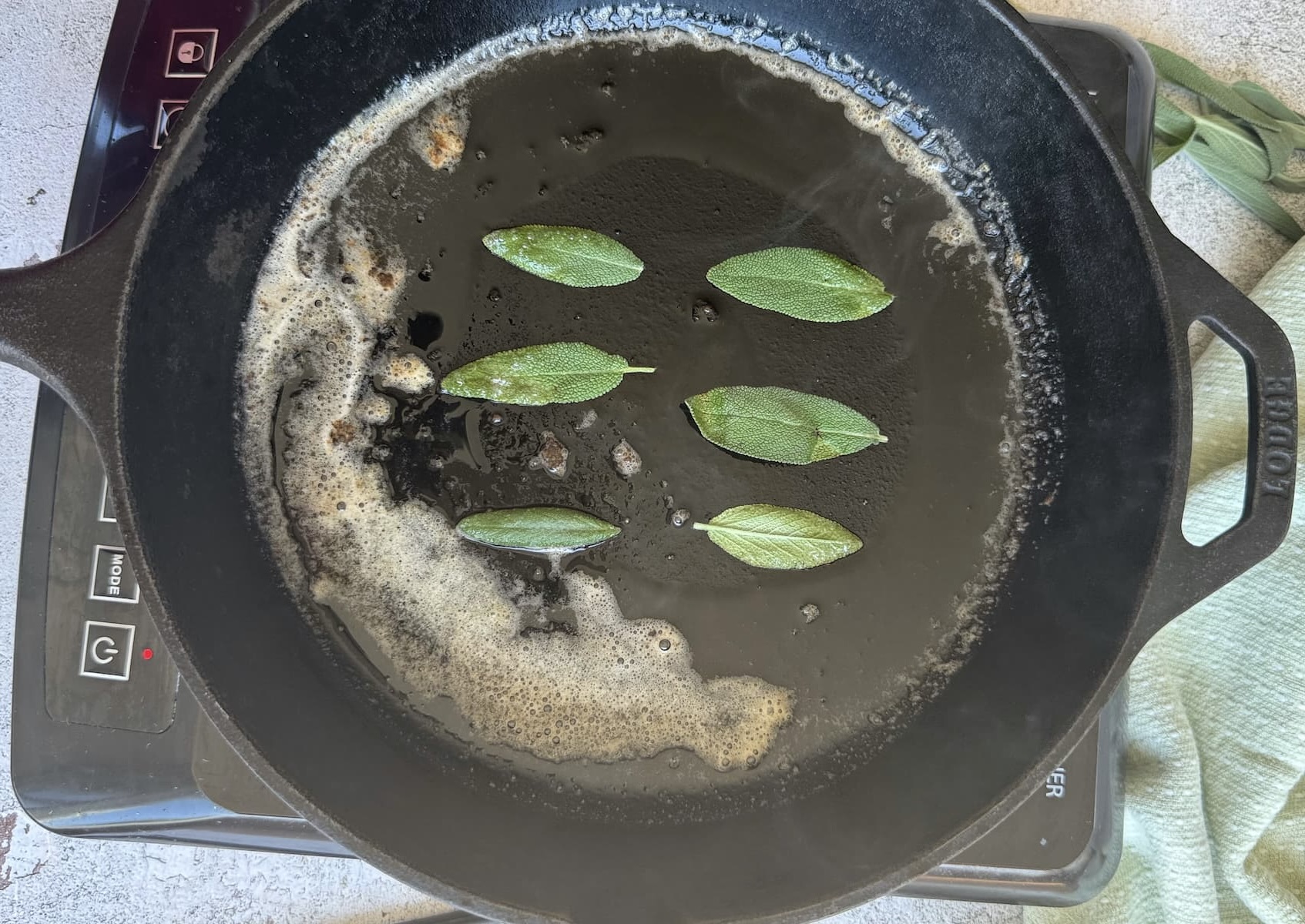
- Use medium-high heat. The oil should be hot but not smoking — around 350–375°F (175–190°C). If the leaves sizzle instantly when added, you’re good to go.
- Use neutral oil for a clean crisp, or butter for rich flavour. Butter adds amazing nutty depth, but you’ll need to watch closely to avoid burning. A combo of butter + neutral oil gives the best balance.
- Don’t overcrowd the pan. Fry in small batches so the leaves stay flat and crisp up evenly. Overcrowding can lower the oil temperature and lead to limp leaves.
- Only fry for a few seconds. Each leaf needs just 3–5 seconds per side. They cook fast, so keep a close eye to avoid burning or browning. EXTRA TIP: If your sage leaves aren’t sizzling right away, gently tilt or swirl the pan to move the butter under and around the leaves. This helps them crisp evenly and speeds things up without overcooking the butter.
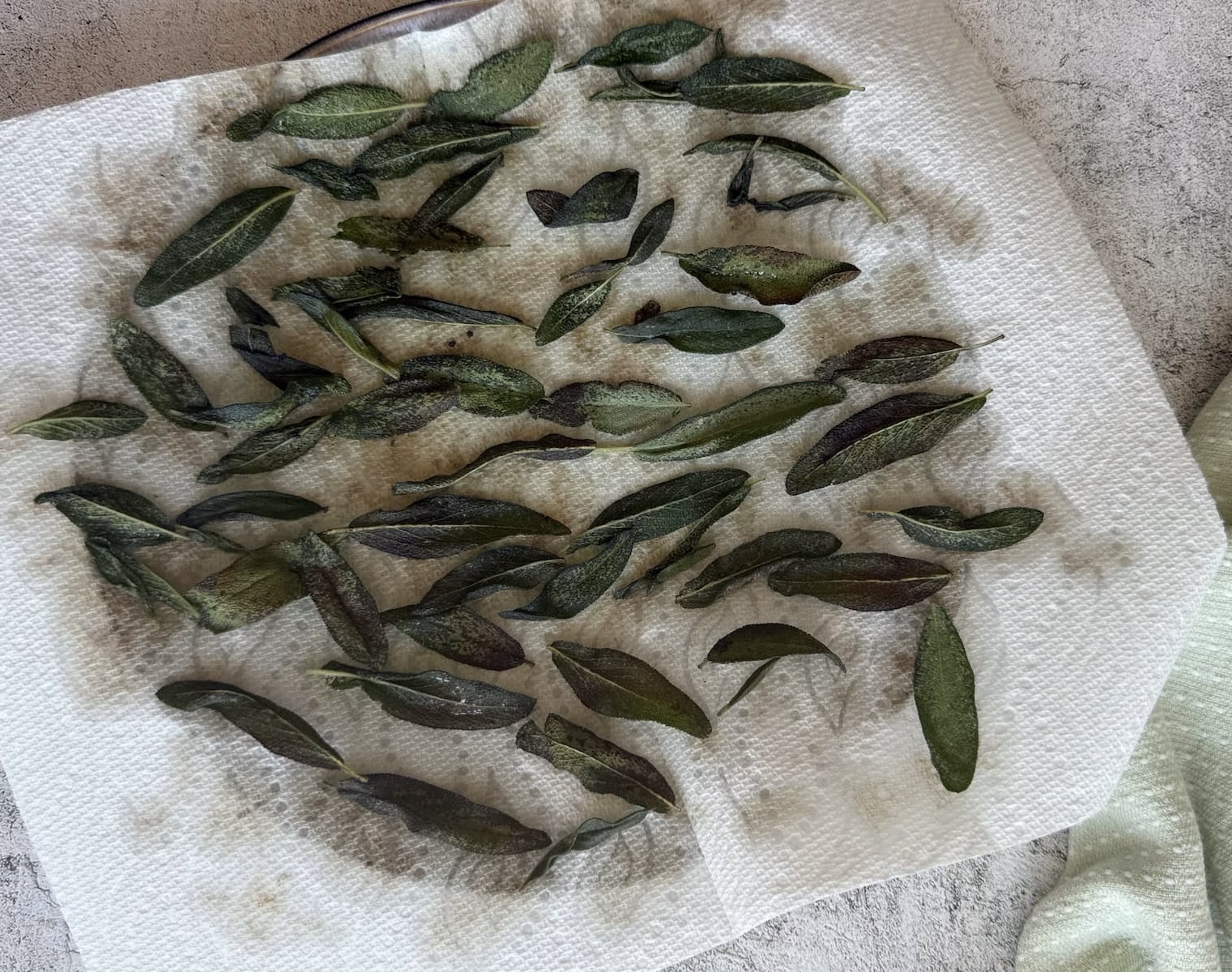
- Drain and salt immediately. Transfer the fried sage leaves to a paper towel-lined plate and sprinkle with salt while still hot as that’s when it sticks best and brings out the flavour.
- Serve fresh. Fried sage leaves are best enjoyed within an hour. If you need to make them ahead, store uncovered at room temp. Covering them traps moisture and ruins the crisp.


FREQUENTLY ASKED QUESTIONS
es! Fresh sage leaves are perfect for frying. A quick flash in hot oil or butter transforms them into crispy, savoury garnishes that add depth and texture to all kinds of dishes.
Fried sage is generally used in small amounts as a garnish, so it adds flavour without many calories. Sage itself is rich in antioxidants and nutrients, though frying in oil or butter does add fat. For a lighter option, use a neutral oil and drain well.
When cooked, especially fried, sage becomes earthy, slightly peppery, and more mellow than when raw. Frying brings out a nutty, almost buttery flavour with a crispy texture that melts in your mouth.
Use fried sage leaves to elevate pasta, risotto, soups, gnocchi, roasted vegetables, squash dishes, or even as a crunchy topping for eggs or sandwiches. They also pair beautifully with fall flavours like pumpkin, sweet potato, and brown butter.
Try these crispy fried sage leaves on my creamy artichoke soup!
Fried sage leaves are best eaten fresh, ideally within an hour. If needed, store them uncovered at room temperature for a few hours. Avoid refrigerating or sealing in containers, as trapped moisture will soften them.

MORE HERB-FORWARD RECIPES
AUTHENTIC ARGENTINIAN CHIMICHURRI
LOVE THIS RECIPE? PIN IT FOR LATER!

FRIED SAGE LEAVES
Video
Ingredients
- 15 Fresh Sage Leaves (whole and dry)
- 2 tbsp Neutral Oil (such as avocado, grapeseed, or light olive oil), Butter, or Both
- Pinch of Fine Sea Salt or Flaky Salt (optional)
Instructions
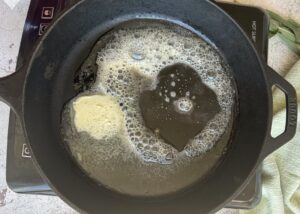
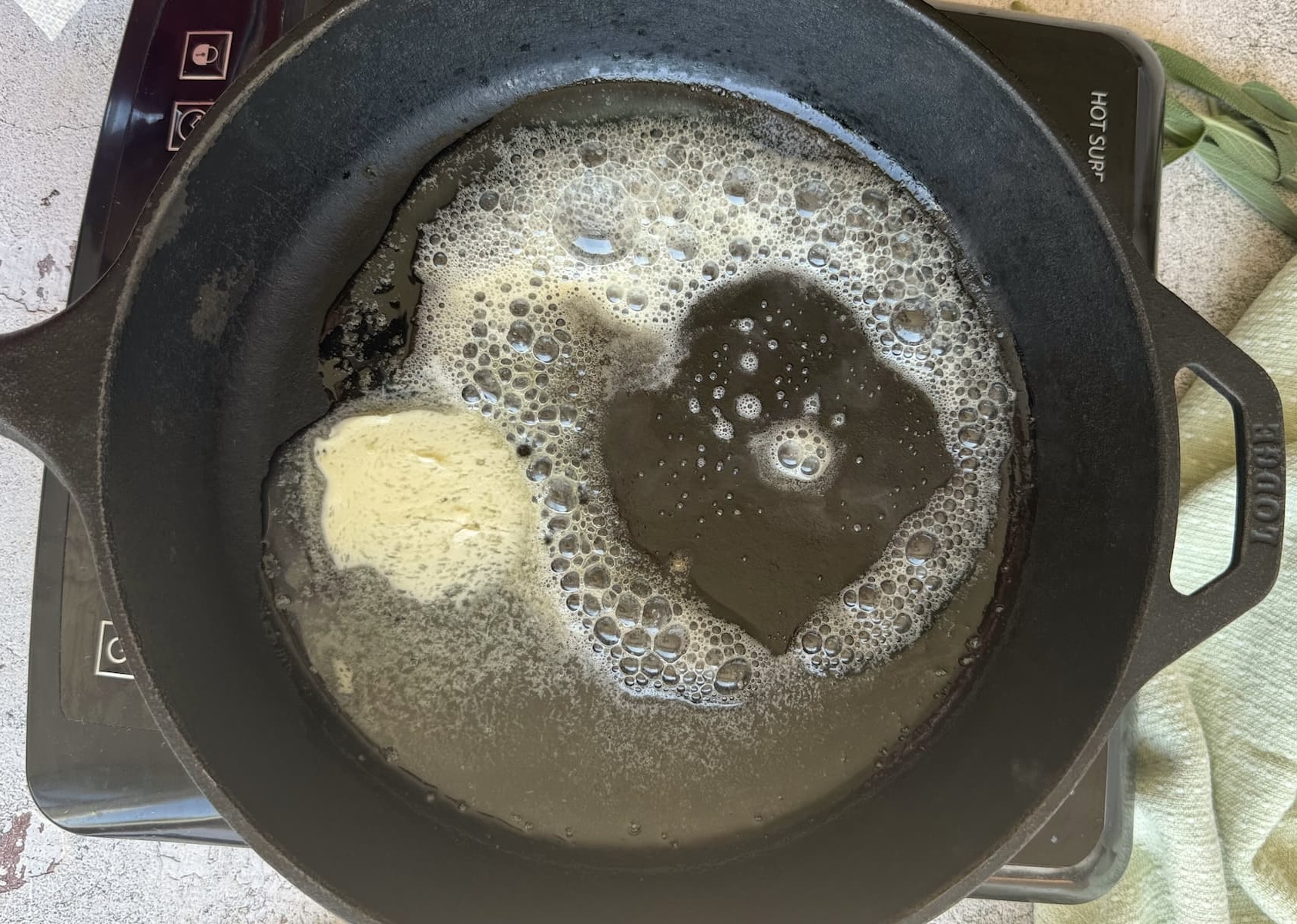
- Heat oil or butter in a small skillet over medium-high heat until shimmering but not smoking. You want just enough to coat the bottom of the pan. Test to see if it's hot enough by adding a leaf… if it crisps up right away then you're good to go.
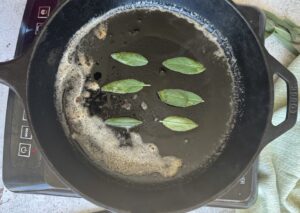
- Carefully add sage leaves in a single layer. Fry for about 3-5 seconds per side, until crisp and slightly darkened. They cook fast so watch closely!
- Using tongs or a slotted spoon, transfer leaves to a paper towel-lined plate to drain. Immediately sprinkle with flaky salt, if using. Serve fresh as a crunchy garnish on soups, pastas, or salads.

Nutrition
Don’t skip the good stuff —
scroll up above the recipe card for ingredient notes, tips & tricks, and easy swaps/variations.Made it? Tell me everything.
I LOVE seeing what you made! Tag @hiphipgourmet on Instagram (or use #hiphipgourmet) so I can see it — then rate it + upload your photo below. 💖
The links in this post are affiliate links. Thanks for supporting HipHipGourmet!